Send a drawing

Series index

Magnetic track series: M25, M35 and the 48V family

Sampo's magnetic track range splits into two voltage families. The high-voltage pair, M25 and M35, runs on 95–260V with no external transformer. The 48V family covers a 20mm system, a 26mm ultra-thin profile, an ultra-thin light-strip (belt) system and a semi-flexible track. Each one has its own fixture list, so the series comes first and the heads second.

If you aren't sure where to start, the selector below asks two questions and points you to one of four core series. The decision table under it gives the same answers in plain text.

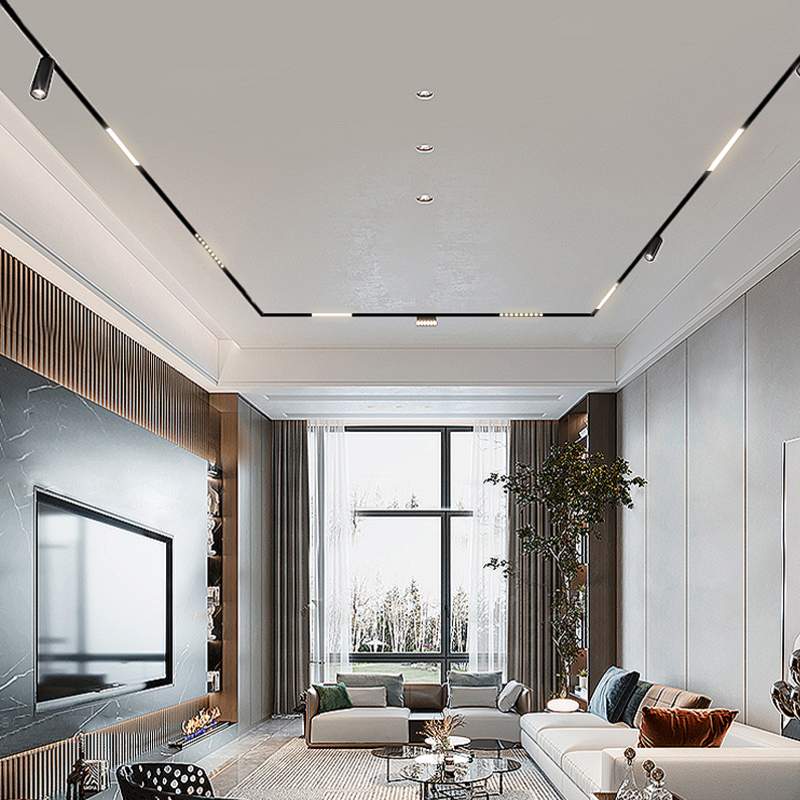
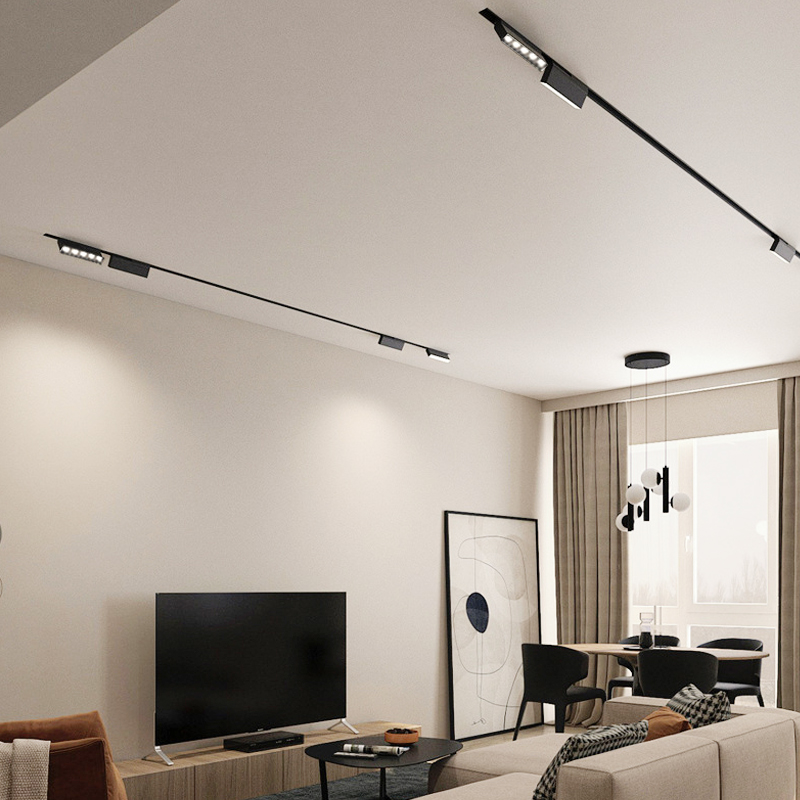
Recessed black magnetic track outlining a lounge ceiling with spot and linear heads

Find your series

Two questions, one magnetic system

Pick one answer in each column. The result names a series, says why, and links to its page. Without JavaScript, the decision table below gives the same answers.

1Voltage on the ceiling
2Room and fixture size

Answer both questions to see a recommendation.

Decision table

Q1 voltageQ2 roomSeriesReason
Mains-direct is fineHome or light-duty roomM25The 25mm slot carries smaller fixtures and runs on 95–260V without an external transformer. It comes in smart WiFi and non-smart EMC variants, which suits homes and light-duty rooms.
Mains-direct is fineShop, museum or officeM35The 35mm slot takes larger fixtures for shops, museums and offices. It's still mains-direct, and the 4-wire smart build is the common choice in commercial rooms.
Mains-direct is fineLow ceiling or no main light48V 26mm ultra-thinThe ultra-thin magnetic profiles are in the 48V family, so a truly slim recessed line means stepping down to 48V. If mains-direct is non-negotiable, M25 is the slimmer of the two high-voltage tracks.
I'd rather run 48VHome or light-duty room48V 20mm48V lowers touch risk, and the regular 20mm profile keeps a standard ceiling simple, surface-mounted or recessed.
I'd rather run 48VShop, museum or office48V 20mmFor larger rooms on 48V, the 20mm system is the starting point. Tell us the heads you need; we'll confirm which fixtures fit this profile before quoting. If the brief is mainly big display heads on long runs, compare it with M35 too.
I'd rather run 48VLow ceiling or no main light48V 26mm ultra-thinThe ultra-thin profile, with right-angle and rounded corners, is built for low ceilings and schemes with no main light.

Also worth a look: the 48V ultra-thin light-strip (belt) system for continuous lines of light, and the 48V semi-flexible track where the run has to follow a curve. Neither is a selector outcome, because both depend on the drawing.

All six series

Slot, voltage, role and mounting at a glance

The cards list what's verified for each series today. Wattage, beam and colour figures belong to individual fixtures, not to the track, so we quote them against your fixture list instead of printing a single number here.

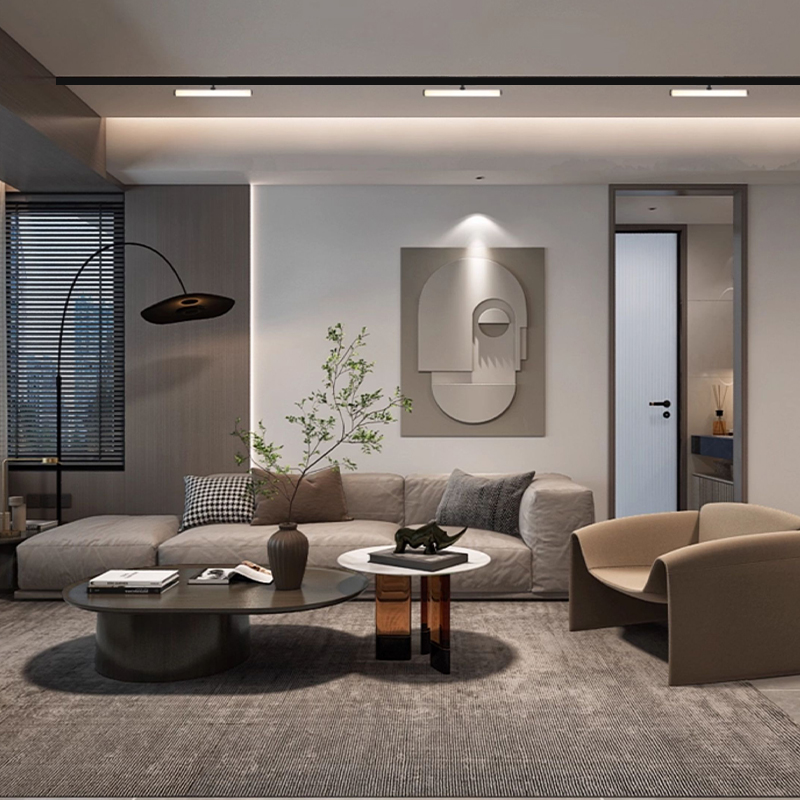
Surface magnetic track with grille heads across a living-room ceiling

M25

M25 is the compact mains track. It suits living rooms, bedrooms and small studios where the heads should stay discreet and nobody wants a driver box hidden in the ceiling.

Slot
25mm
Voltage
95–260V, no external transformer
Positioning
Homes and light-duty rooms; smaller fixtures
Control
Smart WiFi or non-smart EMC variants
Mounting
Surface, recessed or suspended, confirmed for your ceiling
Read the M25 section

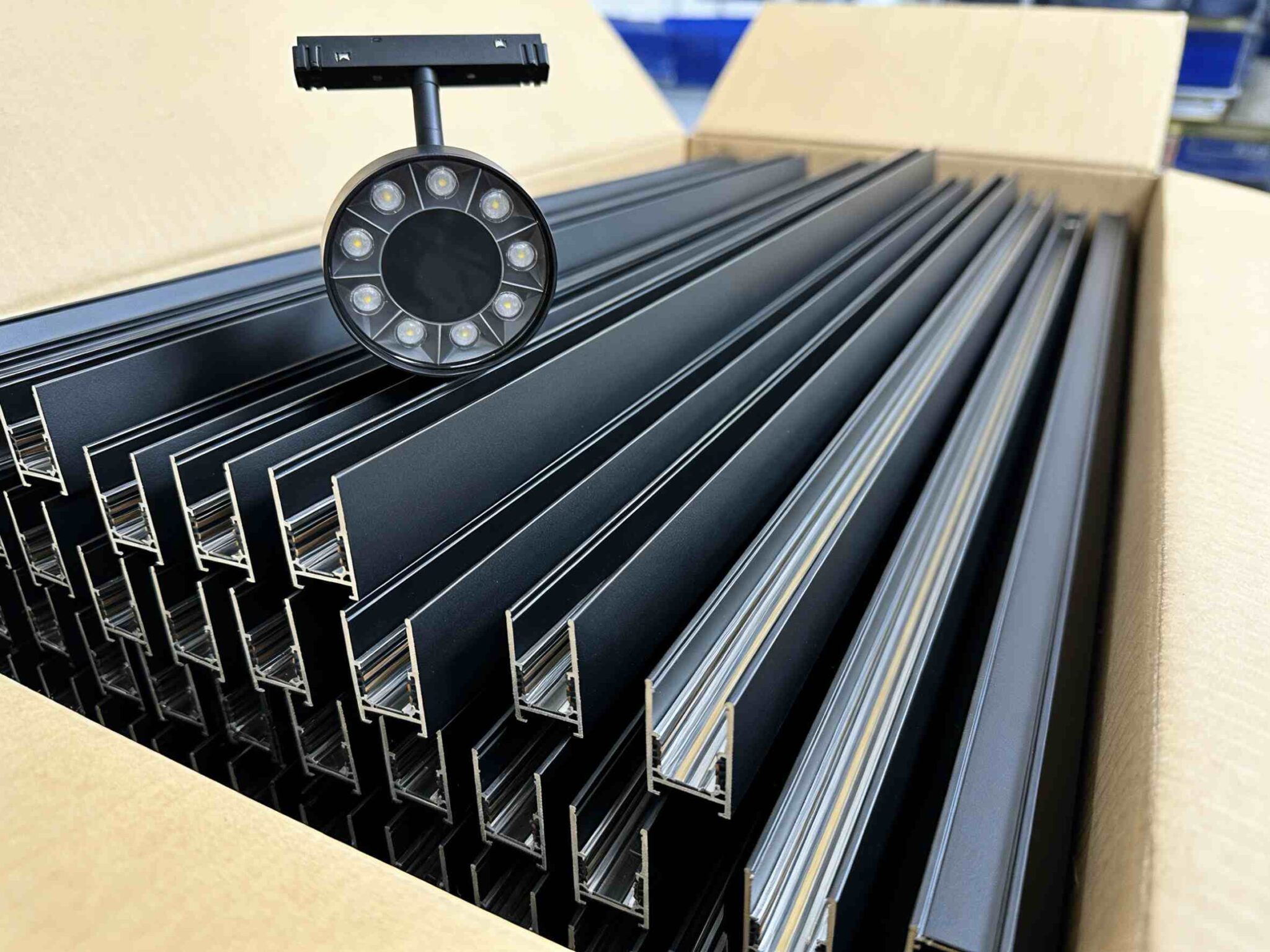
Black magnetic track profiles packed in a carton with a ring spotlight on top

M35

M35 is the wider mains track. The bigger slot carries larger heads, which is what display walls, gallery rooms and open offices usually ask for.

Slot
35mm
Voltage
95–260V, no external transformer
Positioning
Shops, museums, offices; larger fixtures
Control
4-wire smart build is common
Mounting
Surface, recessed or suspended, confirmed for your ceiling
Read the M35 section

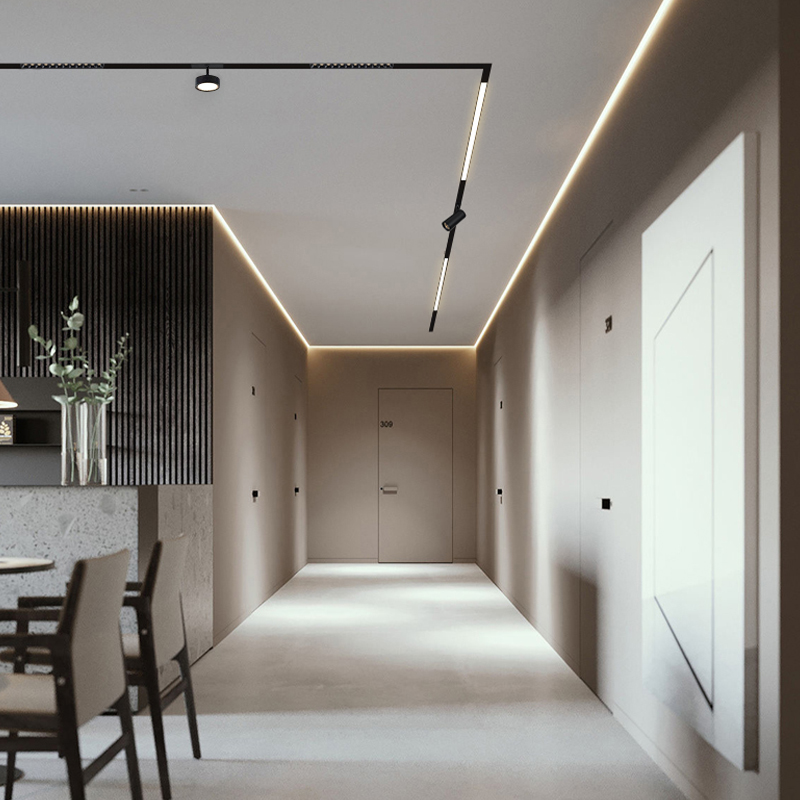
Magnetic track with spot and linear heads running along a corridor ceiling

48V 20mm

The 20mm system is the everyday 48V track. It's the one to start from when low voltage is the priority and the ceiling has no unusual height limits.

Profile
20mm
Voltage
48V low-voltage, driver-fed
Positioning
Standard ceilings where lower touch risk matters
Control
Smart options vary by fixture category
Mounting
Surface or recessed

Read the 48V 20mm section

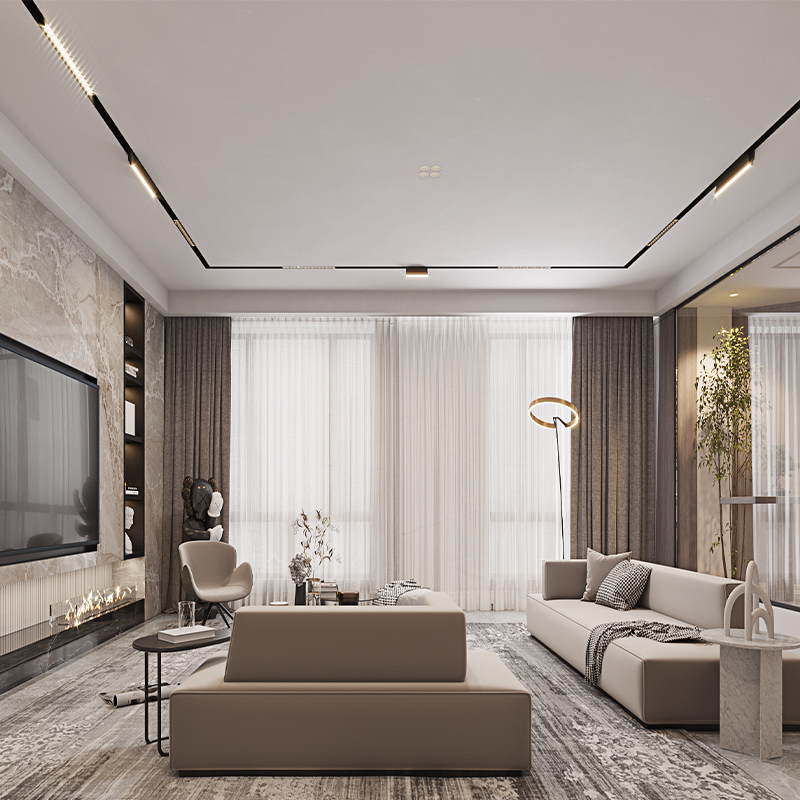
Recessed magnetic track framing a high living-room ceiling with spot and linear heads

48V 26mm ultra-thin

The ultra-thin profile is built to almost vanish into the ceiling. Right-angle and rounded corners let the line wrap a room, which is how no-main-light designs are usually drawn.

Profile
26mm ultra-thin
Voltage
48V low-voltage, driver-fed
Positioning
Low ceilings, no-main-light schemes
Corners
Right-angle and rounded corner pieces
Mounting
Recessed as a slim line

Read the 48V 26mm ultra-thin section

Magnetic track carrying a row of linear heads above a lounge

48V light-strip (belt)

The belt system is chosen when the line of light itself is the design, rather than a row of separate heads.

Profile
Ultra-thin strip / belt
Voltage
48V
Positioning
Continuous glowing lines
Control
Confirmed per project
Mounting
Confirmed against the drawing

Read the 48V light-strip (belt) section

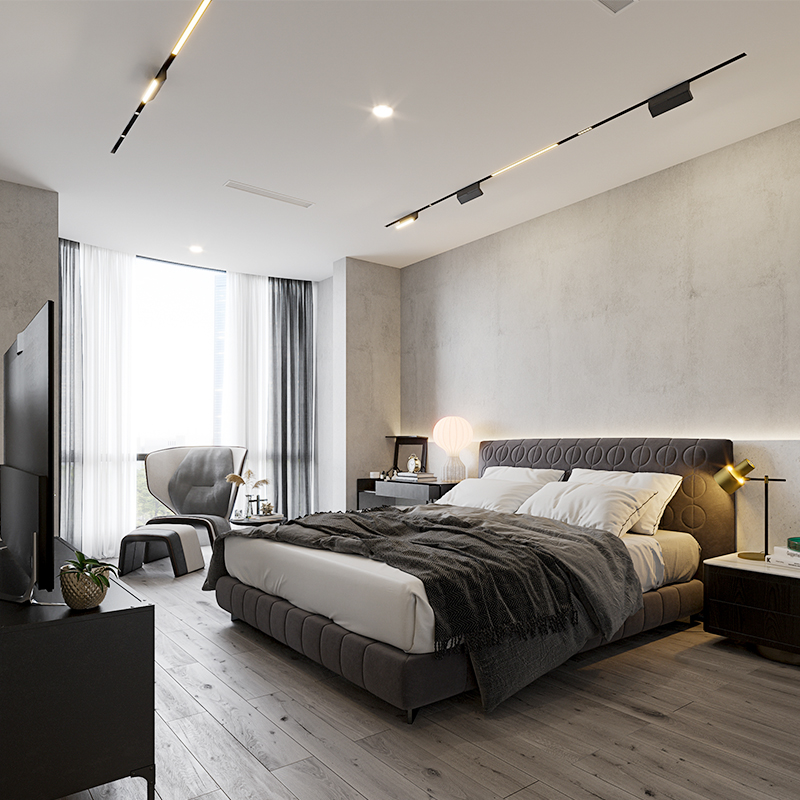
Two magnetic track runs with spot and linear heads above a bed

48V semi-flexible

Semi-flexible track bends to follow a curved ceiling feature where a straight run and a corner joint would look clumsy.

Profile
Semi-flexible track
Voltage
48V
Positioning
Runs that follow a bend
Control
Confirmed per project
Mounting
Confirmed against the drawing

Read the 48V semi-flexible section

Comparison

Series comparison matrix

Read it left to right: slot and voltage decide what the ceiling has to hold and power, and the role column tells you where each one usually ends up.

SeriesSlot / profileVoltageTypical roleDistinguishing point
M2525mm95–260VHomes, light-duty roomsSmaller heads; smart WiFi or EMC
M3535mm95–260VShops, museums, officesLarger heads; 4-wire smart common
48V 20mm20mm48VStandard ceilings, lower touch riskRegular low-voltage profile
48V 26mm ultra-thin26mm48VLow ceilings, no main lightRight-angle and rounded corners
48V beltstrip48VContinuous lines of lightUltra-thin belt
48V semi-flexibleflexible48VCurved runsFollows a bend

Before you enquire

What to send with a series question

A useful first message is short. It doesn't need a full lighting design, only enough for us to check the series and the profile against the space.

  • The voltage you'd prefer, or the reason you're unsure: local rules, who installs it, whether the track is within reach.
  • Ceiling type and height, and whether it's still open or already finished.
  • Approximate run lengths and where corners or bends fall.
  • The fixture jobs: accent, general fill, wall wash or a linear line.
  • Whether you need app or remote control, dimming, or adjustable colour temperature.
  • For trade buyers: your market and whether you need private-label packaging.

Next step

Send the ceiling, we'll send the system

A plan or a phone photo of the ceiling, the rough run lengths and the voltage you prefer are enough to start. We reply with a suggested series, the profile and the fixture families that fit.