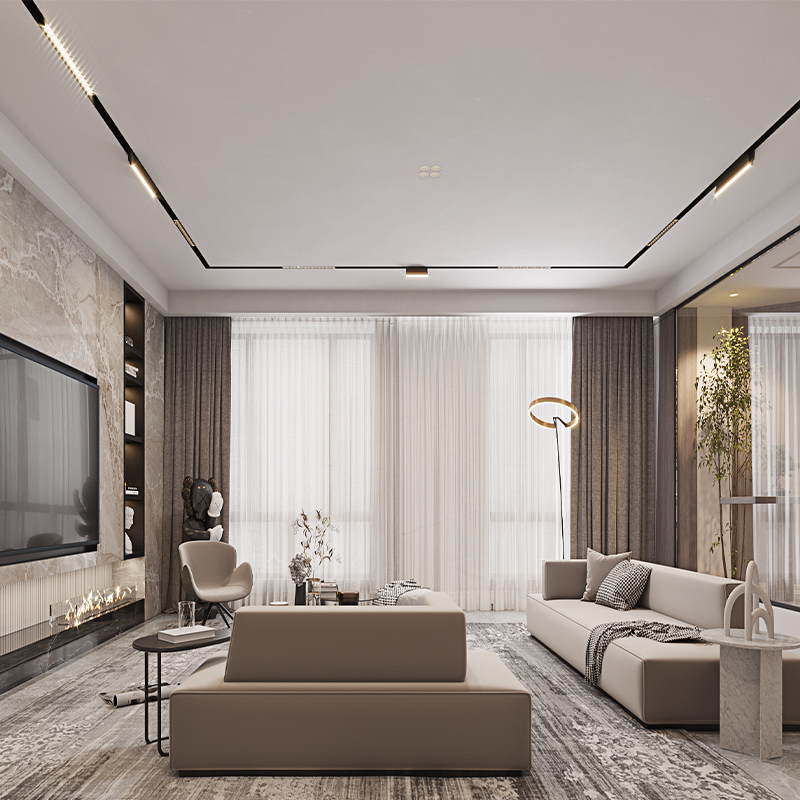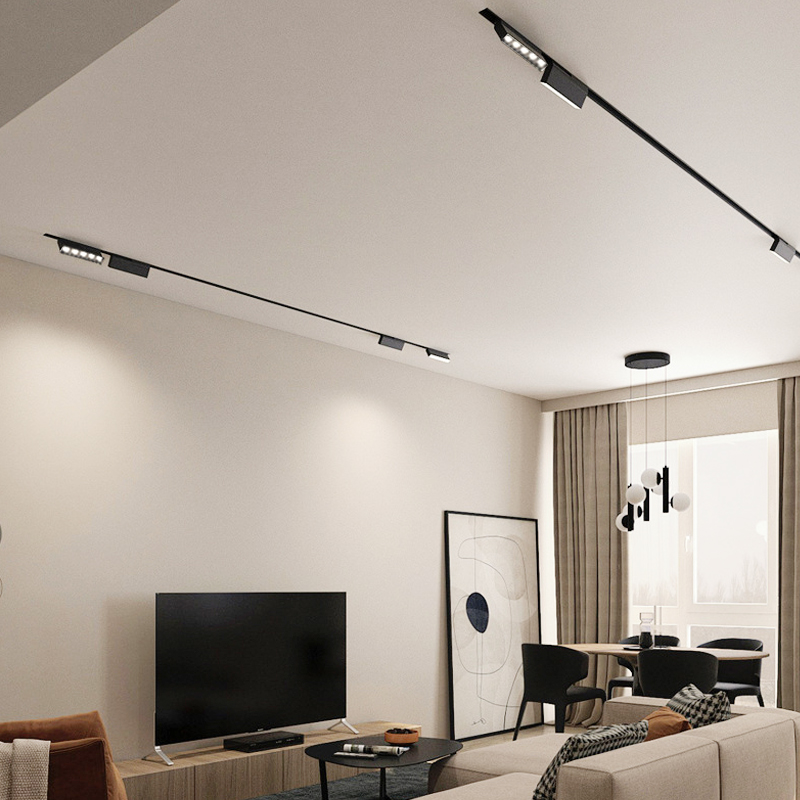
M25
Mains-direct track for homes and light-duty rooms. Smaller fixtures, smart WiFi or non-smart EMC variants.
Series detailsMagnetic track systems · high-voltage and 48V
Magnetic track lighting lets each fixture click onto a powered rail and slide along it, so heads can be moved, added or swapped long after the ceiling is finished. Sampo makes mains-voltage M25 and M35 tracks and a 48V family with 20mm, 26mm ultra-thin, light-strip and semi-flexible profiles. This guide helps you settle the voltage and the slot before you ask for a quote.
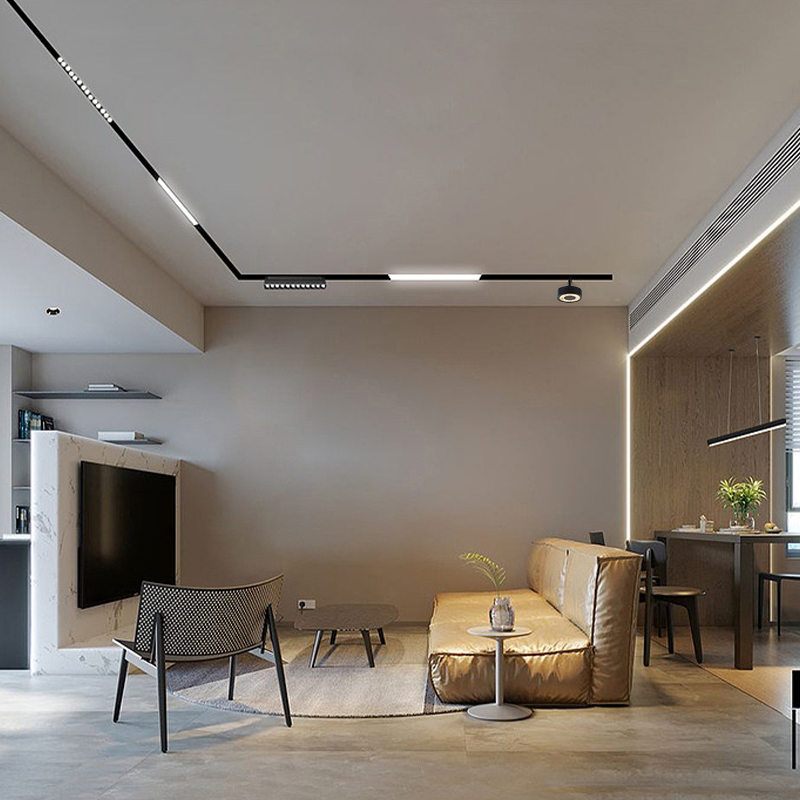
| Q1 voltage | Q2 room | Series | Reason |
|---|---|---|---|
| Mains-direct is fine | Home or light-duty room | M25 | The 25mm slot carries smaller fixtures and runs on 95–260V without an external transformer. It comes in smart WiFi and non-smart EMC variants, which suits homes and light-duty rooms. |
| Mains-direct is fine | Shop, museum or office | M35 | The 35mm slot takes larger fixtures for shops, museums and offices. It's still mains-direct, and the 4-wire smart build is the common choice in commercial rooms. |
| Mains-direct is fine | Low ceiling or no main light | 48V 26mm ultra-thin | The ultra-thin magnetic profiles are in the 48V family, so a truly slim recessed line means stepping down to 48V. If mains-direct is non-negotiable, M25 is the slimmer of the two high-voltage tracks. |
| I'd rather run 48V | Home or light-duty room | 48V 20mm | 48V lowers touch risk, and the regular 20mm profile keeps a standard ceiling simple, surface-mounted or recessed. |
| I'd rather run 48V | Shop, museum or office | 48V 20mm | For larger rooms on 48V, the 20mm system is the starting point. Tell us the heads you need; we'll confirm which fixtures fit this profile before quoting. If the brief is mainly big display heads on long runs, compare it with M35 too. |
| I'd rather run 48V | Low ceiling or no main light | 48V 26mm ultra-thin | The ultra-thin profile, with right-angle and rounded corners, is built for low ceilings and schemes with no main light. |
Also worth a look: the 48V ultra-thin light-strip (belt) system for continuous lines of light, and the 48V semi-flexible track where the run has to follow a curve. Neither is a selector outcome, because both depend on the drawing.
The range
Every card below is a magnetic system in its own right, with its own profile and fixture list. The high-voltage pair runs on 95–260V with no transformer to hide. The 48V group trades a driver for lower touch risk and slimmer profiles.
Mains-direct track for homes and light-duty rooms. Smaller fixtures, smart WiFi or non-smart EMC variants.
Series details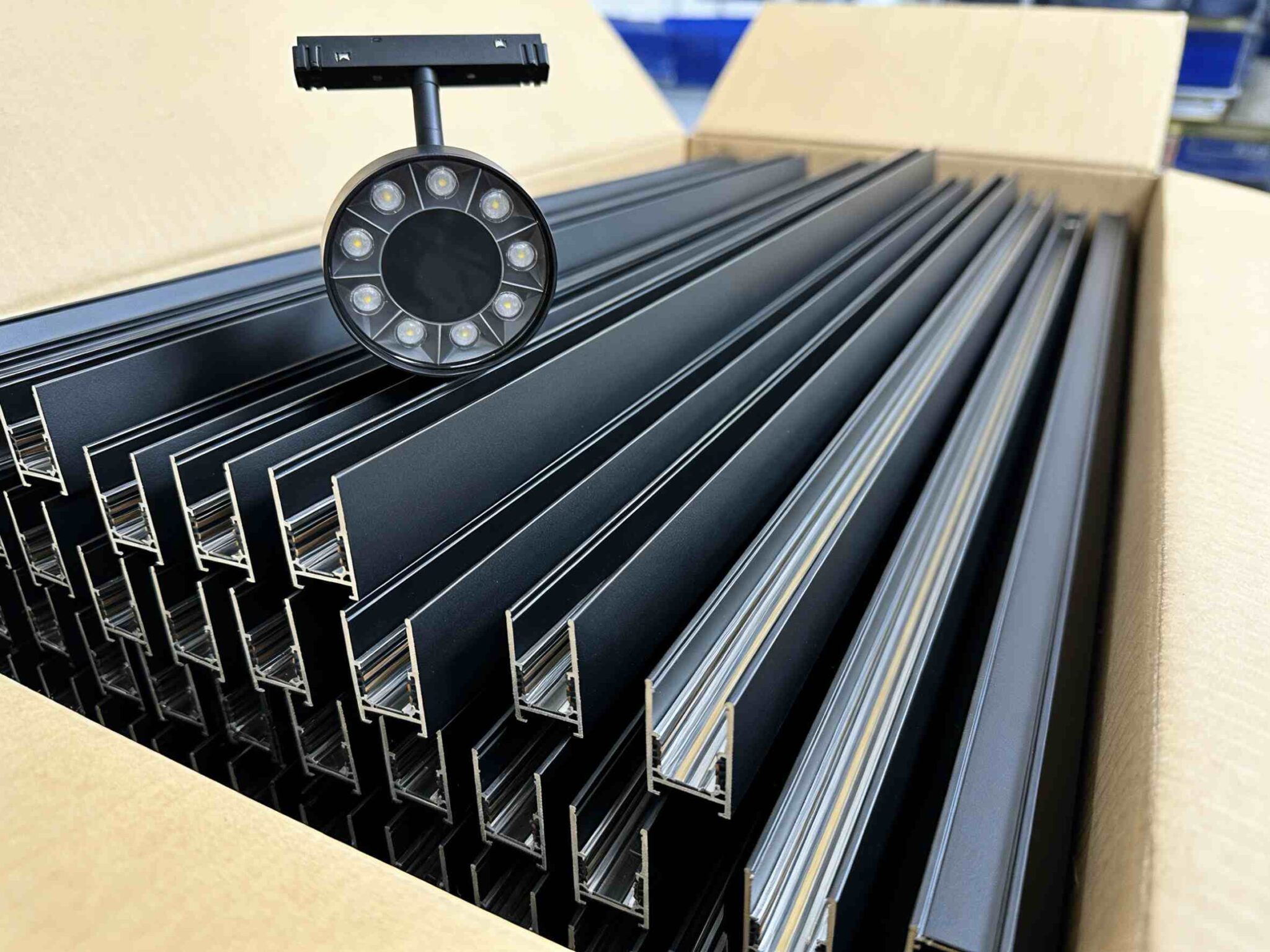
Mains-direct track for shops, museums and offices. Larger fixtures; the 4-wire smart build is common.
Series details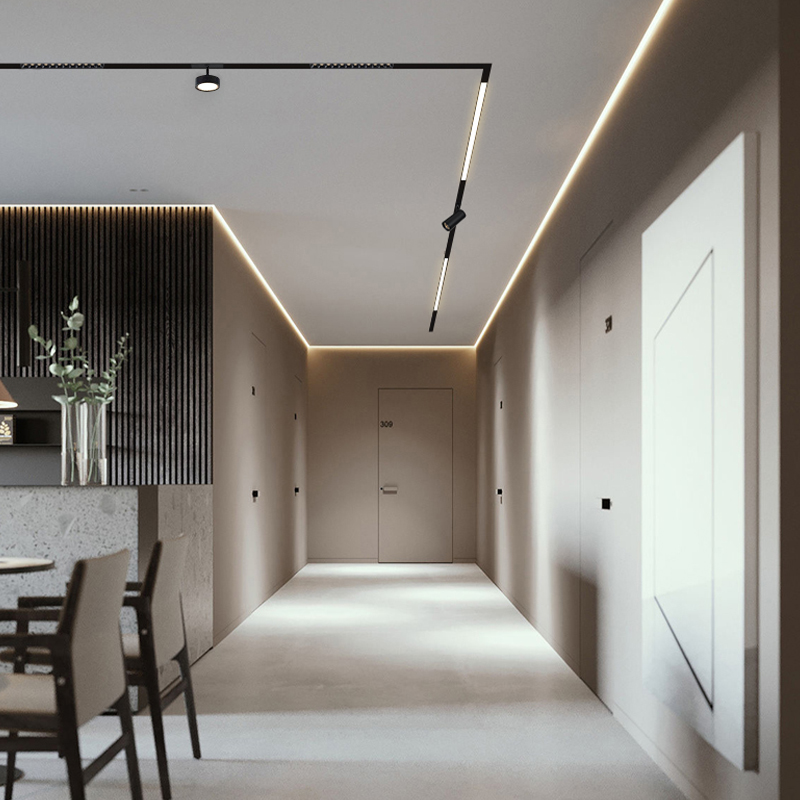
Low-voltage track with a regular profile. Lower touch risk, surface or recessed in a standard ceiling.
Series details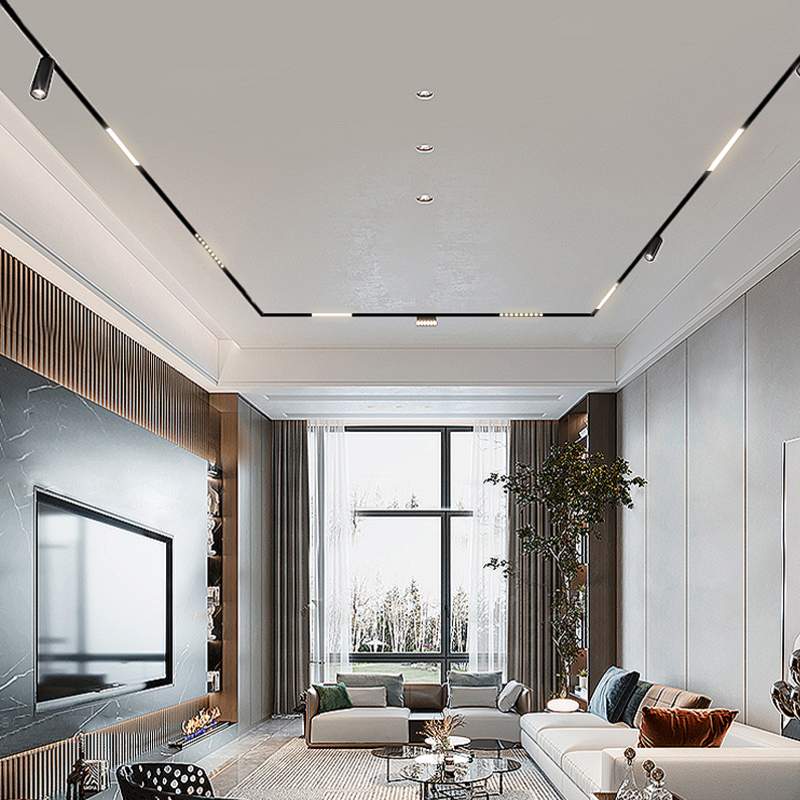
Slim recessed line with right-angle and rounded corners, for low ceilings and no-main-light schemes.
Series details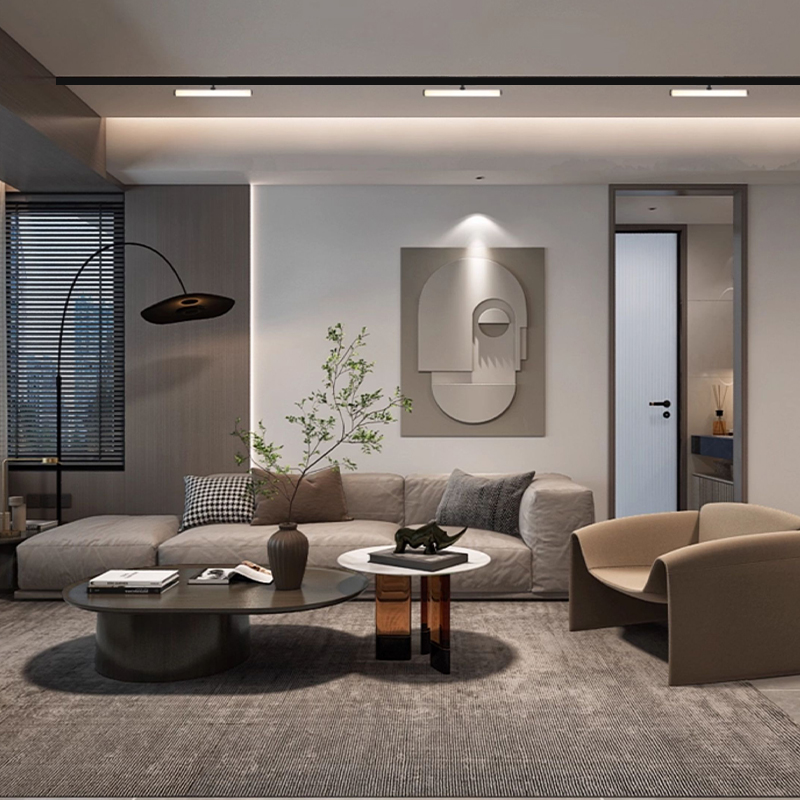
An ultra-thin belt system for continuous lines of light where the track itself reads as a glowing line.
Series details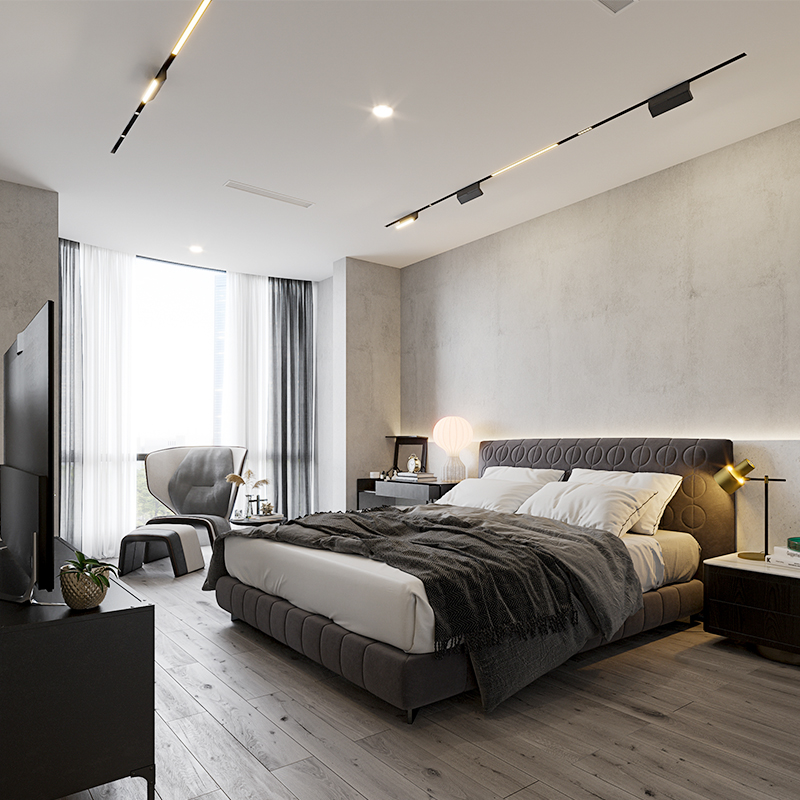
A semi-flexible 48V track for runs that need to follow a bend instead of a straight corner joint.
Series detailsHow it works
A magnetic fixture is offered up to the slot and pulls itself into contact. There's no twist-lock adaptor to line up and no tool to find on a ladder.
The head moves along the run until the light falls where it's needed: on a sofa, a shelf or the table that moved last month.
When the room changes, pull the head off and fit another family, a grille in place of a spot or a linear bar instead of a wash. The track stays put.
Mounting
Most magnetic systems can be surface-fixed, recessed into the ceiling or suspended. The right one depends on the ceiling build and on when you're installing, before or after it's closed.
The track is fixed straight onto the finished ceiling. It's the quickest route in a renovation, since nothing needs cutting, and it reads as a deliberate graphic line.
The profile sits in a channel in the ceiling, so only the slot and the heads show. Plan it before the ceiling is closed; the ultra-thin 48V profile is the slimmest option here.
The track hangs on cables or rods under a high or open ceiling. Useful in double-height rooms and exposed-structure spaces where the light needs to come down.
Fixtures
A single run can mix several families. That's the point of the system: one rail, different jobs along its length. Here's what each family does and what we check before promising it on your series.
| Fixture family | What it does on the track | What we confirm for your series |
|---|---|---|
| Magnetic spotlights | Accent and display: a narrow pool on art, shelves or a table. | Head size against the slot; beam and CCT per project. |
| Grille lights | Several small optics in one bar, for even, glare-aware light from a shallow body. | Number of cells and which series carries it. |
| Flood / linear fill lights | Soft general light from the track itself, so a room can skip the main fitting. | Run length and whether the fill head suits your ceiling height. |
| Linear lights | A clean bar of light along the run, often mixed with spots on the same track. | Lengths available for the chosen profile. |
| Wall washers | Even light across a wall or shelving face from a track set near it. | Distance from wall and the series it's offered in. |
Fixture ranges differ between M25, M35 and the 48V profiles. We don't assume one family fits every track; each enquiry gets a per-series fixture list.
Complete range
This site is about magnetic track, but the same factory also makes conventional track heads, downlights and non-magnetic rails. If a project needs those alongside the magnetic runs, they can come in one enquiry. These lines are quoted against your drawing.
Track heads and housings
Downlights
Track rails (non-magnetic)
Guides
Three field guides go deeper than the series pages: choosing a magnetic system, 48V against mains voltage, and planning a layout.
Next step
A plan or a phone photo of the ceiling, the rough run lengths and the voltage you prefer are enough to start. We reply with a suggested series, the profile and the fixture families that fit.