High-voltage magnetic track
M25 and M35 high-voltage magnetic track
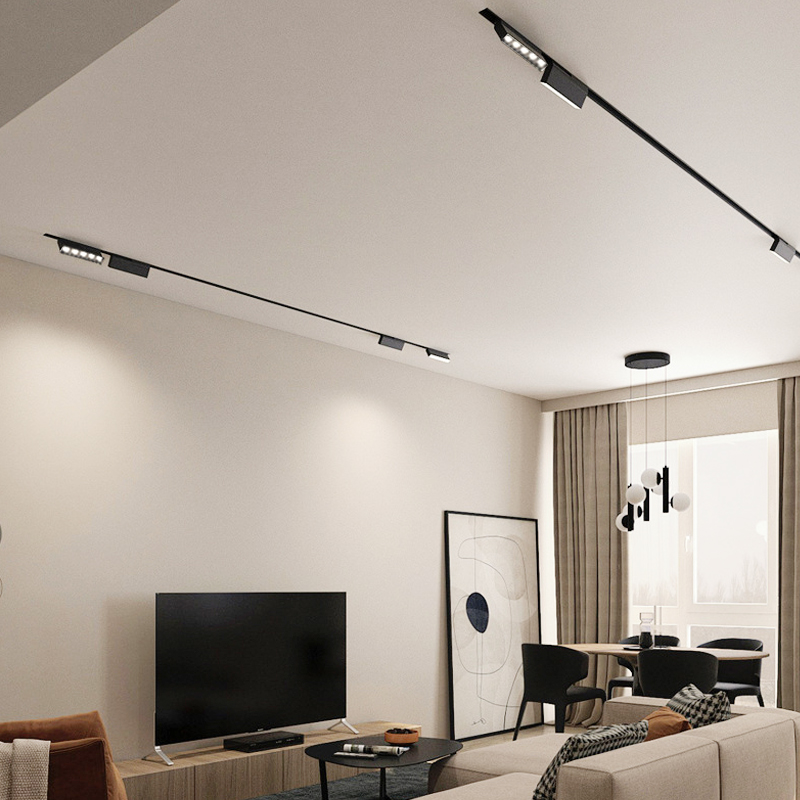
M25 and M35 are Sampo's mains-direct magnetic tracks. Both take 95–260V straight onto the rail, so there's no external transformer to size, ventilate or hide above the ceiling. The difference is the slot: 25mm for smaller fixtures in homes and light-duty rooms, 35mm for larger fixtures in shops, museums and offices.
That one difference drives most of the decision. The slot sets how big the heads can be, and the head size follows from the room: a bedroom reading light and a gallery spotlight aren't the same object.
| M25 | M35 | |
|---|---|---|
| Slot width | 25mm | 35mm |
| Supply | 95–260V, no external transformer | 95–260V, no external transformer |
| Fixture size | Smaller fixtures | Larger fixtures |
| Typical rooms | Homes, light-duty rooms | Shops, museums, offices |
| Control builds | Smart WiFi variant and non-smart EMC variant | 4-wire smart build is common |
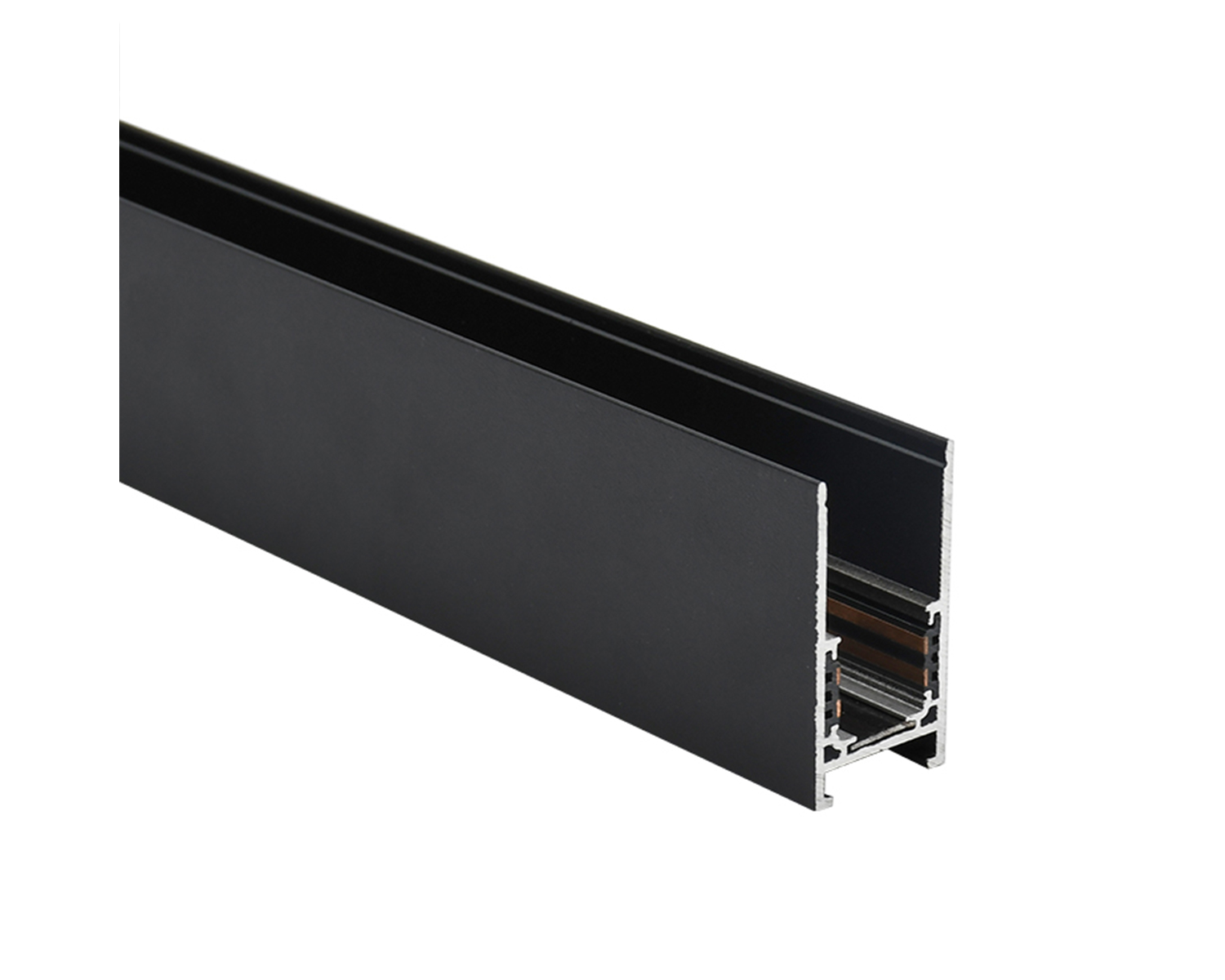
| Profile | Extruded aluminium, brass conductor strips, flame-retardant PVC insulator, baked-paint black or white | |
| Lengths | 1.0 / 1.5 / 2.0 / 3.0 m options, depending on model | |
M25 · 25mm
M25: the compact mains track
M25 is built around smaller fixtures. In a living room or bedroom that's usually what you want: heads that do their job without becoming the main thing you notice on the ceiling. Because the track runs on 95–260V, the install is close to ordinary mains wiring, and you don't need to find space for a driver.
It comes in two electrical builds. The smart variant works over WiFi for app control. The non-smart variant is the EMC build for projects that don't need connectivity and would rather keep the wiring and the bill of materials simple. We'll ask which one you need early, because it changes the fixtures we propose.
Choose M25 when
- The room is residential or light-duty.
- Discreet, smaller heads are part of the brief.
- You want mains-direct wiring with no transformer.
Look elsewhere when
- The scheme needs big display heads: go to M35.
- The ceiling is very low or there's no main light: compare the 48V ultra-thin profile.
M35 · 35mm
M35: the wider track for commercial rooms
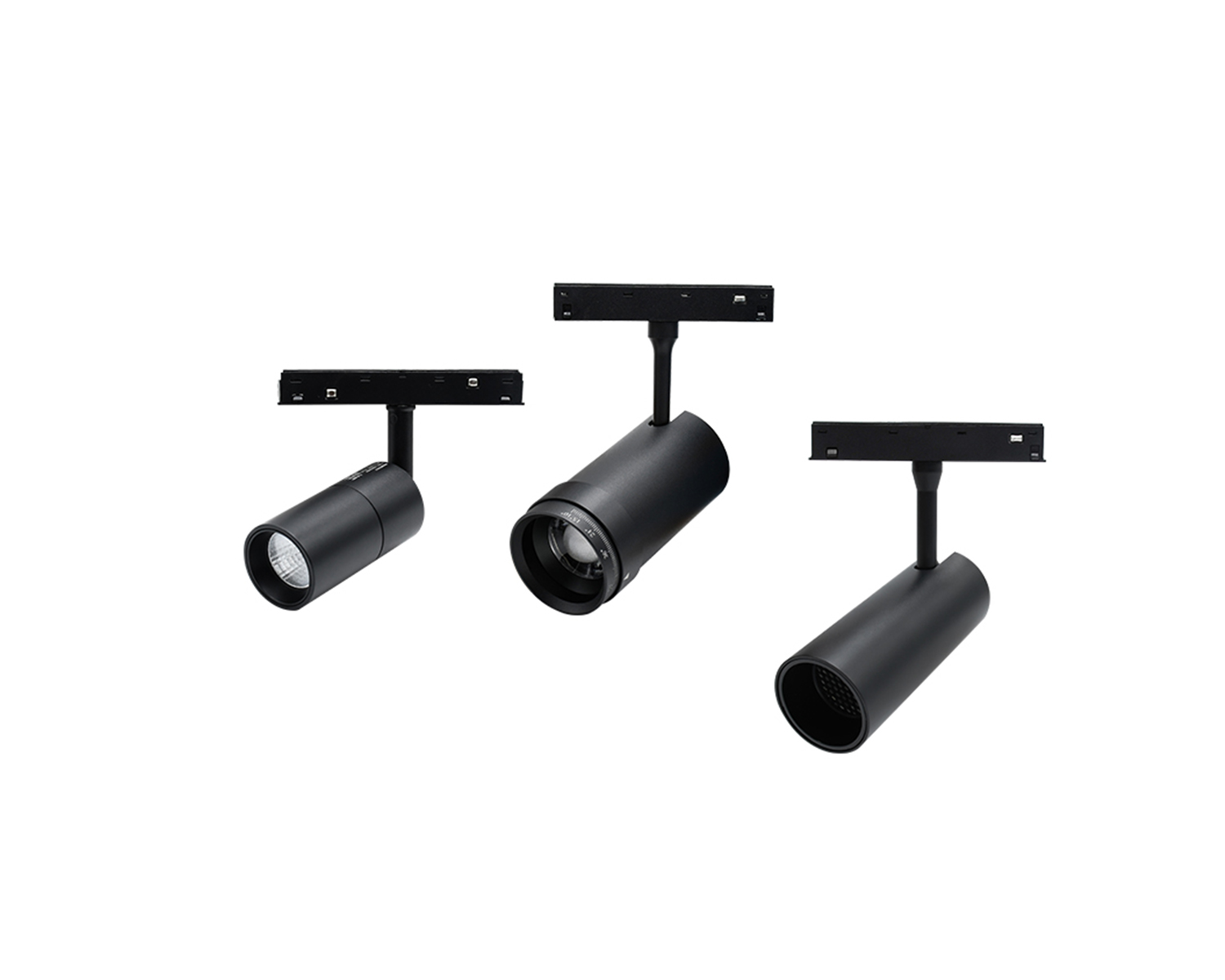
M35 takes larger fixtures. Shops, museums and offices tend to light from further away and over longer runs, and bigger heads are how that's done. The wider slot is what makes room for them, while the supply stays the same 95–260V with no transformer.
In commercial rooms, the 4-wire smart build is the common choice, since it leaves room for control beyond simple on and off. Exactly which control protocol and which fixtures fit depends on the current range, so treat the 4-wire build as a starting point to confirm, not a promise for every head.
Choose M35 when
- Display walls, gallery rooms or open offices are in scope.
- The heads are larger and the runs are longer.
- Mains-direct wiring suits the installer.
Look elsewhere when
- It's a home with compact heads: M25 is enough.
- Touch risk is a concern, for instance a low track within reach: look at 48V.
Planning notes
Things that decide a high-voltage quote
High-voltage magnetic track is usually the simpler install, because the power arrives the way it does everywhere else in the building. That still leaves a few choices that change the price and the parts list, and it's faster to settle them before the first drawing goes back and forth.
Fixture figures such as wattage, beam angle and colour rendering belong to the heads, not to the track, so we quote them against your fixture list rather than publishing a single number for the series.
- Run lengths, so the cut list can use the available 1.0, 1.5, 2.0 or 3.0 m options for the model.
- Finish: black or white baked paint, to sit with the ceiling.
- Smart or non-smart. On M25 that's the WiFi variant against the EMC variant; on M35 it's usually the 4-wire smart build.
- Mounting: surface, recessed or suspended, and whether the ceiling is already closed.
- The fixture families on each run: spots, grilles, fill, linear or wash.
Not sure mains-direct is right? Compare the 48V magnetic family or go back to the two-question selector.
Next step
Send the ceiling, we'll send the system
A plan or a phone photo of the ceiling, the rough run lengths and the voltage you prefer are enough to start. We reply with a suggested series, the profile and the fixture families that fit.